
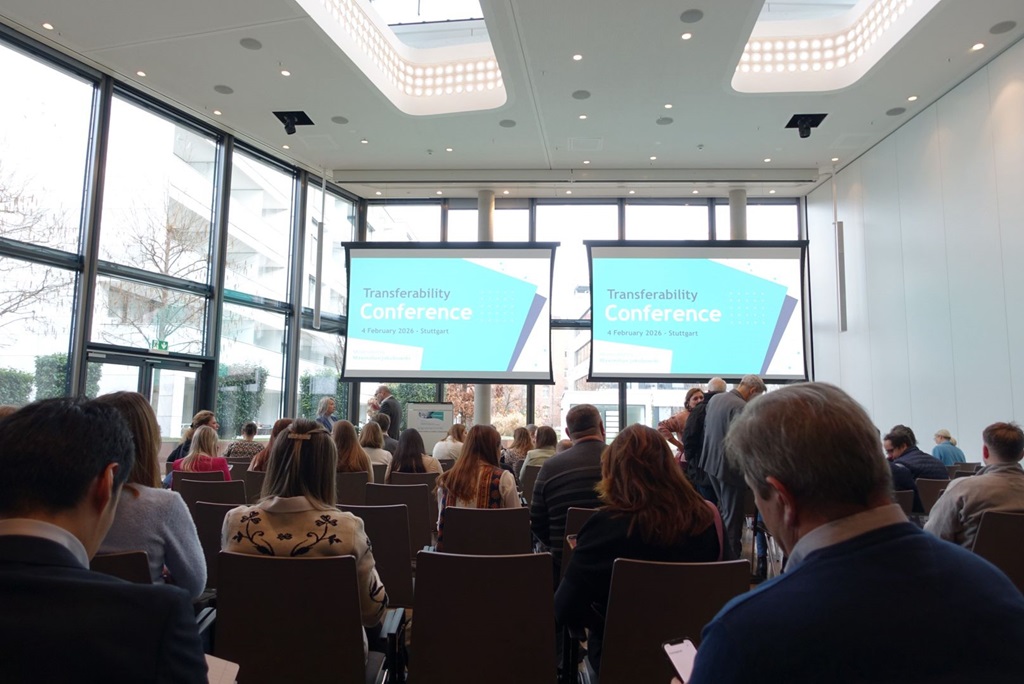
Capacity2Transform, together with seven partner projects, spent the day exploring a central question:
How do we turn green and digital ambitions into sustainable regional capacity?
Transformation is a skills challenge
One of the strongest messages from the keynote speech was that transformation is not primarily technological. Europe does not lack solutions — it lacks widespread capacity to implement them.
Across sessions, it became clear that successful transformation depends on:
- Digital competence
- Sustainability literacy
- Creative problem-solving
- Cross-sector collaboration skills
- Ecosystem coordination capacity
In other words, skills form the invisible infrastructure of systemic change.
From isolated tools to ecosystem design
Each of the eight projects showcased distinct tools and methodologies:
- competence frameworks for CCIs,
- SME diagnostic systems,
- sustainability facilitator certifications,
- place-based green pacts,
- voucher schemes and green innovation instruments,
- co-creation formats for Digital–Green–Creative solutions.
While diverse, these approaches shared a common logic: transformation must be embedded within regional ecosystems.
Panel discussions highlighted that SMEs often need trusted intermediaries. Policy makers need tested and documented formats. Support organisations need practical toolkits they can adapt and run independently.
Transferability, therefore, requires design from the beginning.
Building capacity through co-creation
Capacity2Transform’s pilot actions demonstrated that multi-actor collaboration creates durable change. When SMEs, CCIs, digital providers and sustainability actors work together in structured formats, transformation becomes a shared process rather than an isolated intervention.
The Building Bridges process exemplified this approach: regional challenges were transformed into implementable DGC solutions through co-design and transnational upgrading.
Legacy is not optional
The final panel addressed the most important question: what remains after funding ends?
The consensus was clear:
Legacy must be structural.
Results must be:
- Documented and modular
- Accessible via platforms
- Embedded in institutions
- Continued through networks
This is where MediaFactory and KnowledgeFactory play a central role. They ensure that methods and insights do not disappear, but remain usable and adaptable.
The power of visual synthesis
An unexpected highlight was the live graphic recording. By translating hours of discussion into visual maps, the graphic facilitator demonstrated how complex policy debates can become accessible, memorable and transferable.
Sometimes transformation becomes clearer when drawn.
The real conclusion
If the conference had one overarching message, it would be this:
Transformation is not an event.
It is a collective learning process.
And learning must continue beyond projects.
The Transferability Conference did not close a chapter – it strengthened a network committed to building Europe’s transformation capacity together.
Photo credit: Steinbeis Europa Zentrum